Common Life Insurance Buying Mistakes to Avoid
5 min read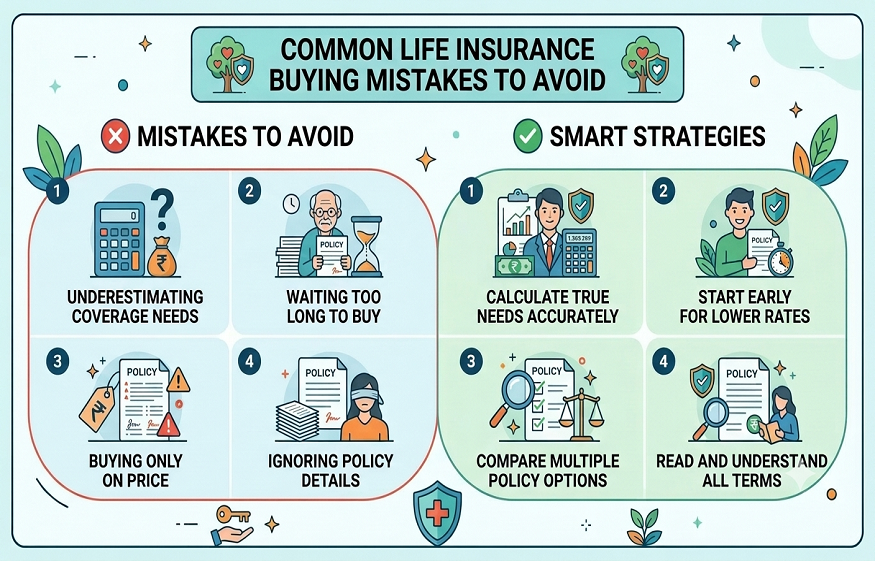
Life insurance is an important part of financial protection, particularly for individuals who have dependants, outstanding loans, or long-term financial responsibilities. However, choosing a policy involves more than simply comparing premiums. The wrong coverage amount, inadequate policy duration, or misunderstanding of policy terms can reduce the financial protection your family receives when it matters most.
Understanding common life insurance buying mistakes can help you make a more informed decision. Whether you are exploring term insurance or comparing general life insurance options, knowing what to evaluate before purchasing a policy can help you choose coverage that aligns with your financial responsibilities and goals.
1. Choosing a Policy Based Only on Premium
One of the most common mistakes is selecting a life insurance policy solely because it has a lower premium. While affordability matters, a cheaper policy may not necessarily provide adequate coverage or benefits for your circumstances.
Instead of focusing only on the premium, compare the sum assured, policy duration, exclusions, benefits, and other applicable conditions. The objective should be to find suitable protection within your budget.
2. Buying Insufficient Life Cover
Another common mistake is underestimating the amount of life cover required. People sometimes choose a policy based on an arbitrary figure without considering their family’s future financial requirements.
When estimating life cover, consider your current income, outstanding loans, household expenses, children’s education, future financial goals, and the financial support your dependants may require.
The right amount of coverage will vary from person to person, so avoid relying solely on generic rules when making this decision.
3. Delaying the Purchase
Many people postpone buying life insurance because they believe they do not need it while they are young and healthy. However, delaying the purchase can affect the premium and may introduce additional considerations if your health or financial responsibilities change later.
Buying life insurance when you have financial dependants or significant long-term responsibilities can help ensure that protection is in place when it is needed.
4. Ignoring the Policy Duration
Choosing the right policy term is just as important as choosing the coverage amount. A policy that expires too early may leave your family without financial protection during important years.
Consider how long your dependants are likely to remain financially dependent on you and when major liabilities, such as home loans or education expenses, are expected to be completed.
Your policy duration should broadly reflect the period during which your income would be most important to your family’s financial security.
5. Not Disclosing Health or Lifestyle Information
Providing incomplete or inaccurate information during the application process can create problems later, particularly when a claim is assessed.
Details relating to medical history, existing conditions, smoking, alcohol consumption, occupation, and other information requested by the insurer should be disclosed accurately.
Do not assume that leaving out information will make the policy cheaper or easier to obtain. Honest disclosure helps the insurer assess the risk appropriately and reduces the possibility of complications during claim settlement.
6. Overlooking Policy Exclusions and Conditions
Another mistake is purchasing a policy without reading the policy documents carefully. While sales materials may highlight key benefits, the policy wording contains the specific terms, conditions, exclusions, and limitations that apply.
Before purchasing general life insurance, review the policy’s exclusions, eligibility conditions, premium payment requirements, grace period, and other relevant provisions.
If a term or condition is unclear, seek clarification from the insurer before making the purchase.
7. Choosing the Wrong Type of Life Insurance
Life insurance products are designed for different purposes. Term insurance primarily focuses on providing life cover for a specified period, while other products may combine insurance with savings or investment-related features.
Choosing a product simply because it is popular or recommended by someone else may not be appropriate for your circumstances.
First identify your primary objective—such as income protection, financial security for dependants, or another long-term requirement—and then evaluate policies accordingly.
8. Forgetting to Update the Nominee
A nominee is an important part of a life insurance policy because the nominee is the person designated to receive the policy proceeds, subject to applicable laws and policy conditions.
Review your nominee details periodically, particularly after significant life events such as marriage, the birth of a child, or other changes in family circumstances.
Keeping nominee information updated can help avoid unnecessary complications when a claim needs to be processed.
9. Not Considering Inflation
A life insurance policy may provide financial protection for many years. However, the purchasing power of money changes over time due to inflation.
A coverage amount that appears adequate today may not provide the same level of financial support several years from now. Consider future expenses when determining the amount of life cover required.
This is particularly important when planning for long-term goals such as children’s education or supporting dependants.
10. Failing to Review the Policy
Buying a life insurance policy should not necessarily be treated as a one-time financial decision. Your income, liabilities, family responsibilities, and financial goals can change over time.
For example, purchasing a home, getting married, having children, or experiencing a significant change in income may alter the amount of protection your family requires.
Review your life insurance coverage periodically and assess whether it continues to align with your circumstances.
How to Avoid Common Life Insurance Mistakes
Before purchasing a life insurance policy, consider following a simple checklist:
- Estimate your family’s current and future financial needs.
- Choose an appropriate level of life cover.
- Select a policy duration based on your financial responsibilities.
- Compare policies beyond their premiums.
- Disclose your health and lifestyle information accurately.
- Read exclusions and policy conditions carefully.
- Choose a policy type based on your actual financial objective.
- Keep nominee details updated.
- Consider the impact of inflation on future expenses.
- Review your coverage whenever your circumstances change.
Make an Informed Life Insurance Decision
Life insurance is ultimately about protecting the financial future of the people who depend on you. Avoiding common buying mistakes can help ensure that your policy provides meaningful protection when your family needs it.
Whether you are evaluating term insurance or other general life insurance options, do not make your decision based solely on premium or promotional benefits. Consider the coverage amount, policy term, exclusions, claim-related conditions, and your family’s long-term financial needs.
Most importantly, read the policy documents carefully and provide accurate information when applying. A thoughtful approach to life insurance today can help provide greater financial confidence and protection for your loved ones in the future.